How Ancestral Stories of Blackthorn Inform Contemporary Healing Narratives
5. Relationships with Blackthorn in Irish Folk Medical Tradition
Blackthorn, Prunus spinosa (Latin) or Draighean (Irish) is a thorny, deciduous shrub or small tree, natively distributed across Europe, West Asia and North Africa, which has a long tradition of plant-human interactions in a folk medicine context. After a review of folk medicine concepts, an introduction to Blackthorn and a synopsis of international practices documented in historical texts, this chapter will examine Irish folk medical relationships with Blackthorn through archival accounts,[1] ethnobotanical references and folkloristic analysis.
Folk medicine is often defined in contrast to allopathic or institutional medicine.[2] This practice obscures the complicated interactions between folk and institutional medical systems and the individuals that negotiate them; however, a working definition of folk medicine is “health traditions that exist alongside but at variance with whatever other medical system is recognised as ‘official’ in the local context.”[3] These vernacular beliefs and practices are developed in response to dis-ease within communities and integrate dealings with both the natural and supernatural environments. Folk medical practices are divided into material and magico-religious categories, though it is important to appreciate that they are generally utilised simultaneously. As explained in the previous chapter, material practice involves seeking direct remedies within the natural landscape of plants, animals and minerals, while magico-religious practices direct symbolic methods of treatment, through ritualised words or actions.[4] An investigation of folk relationships with Blackthorn will elaborate these concepts.
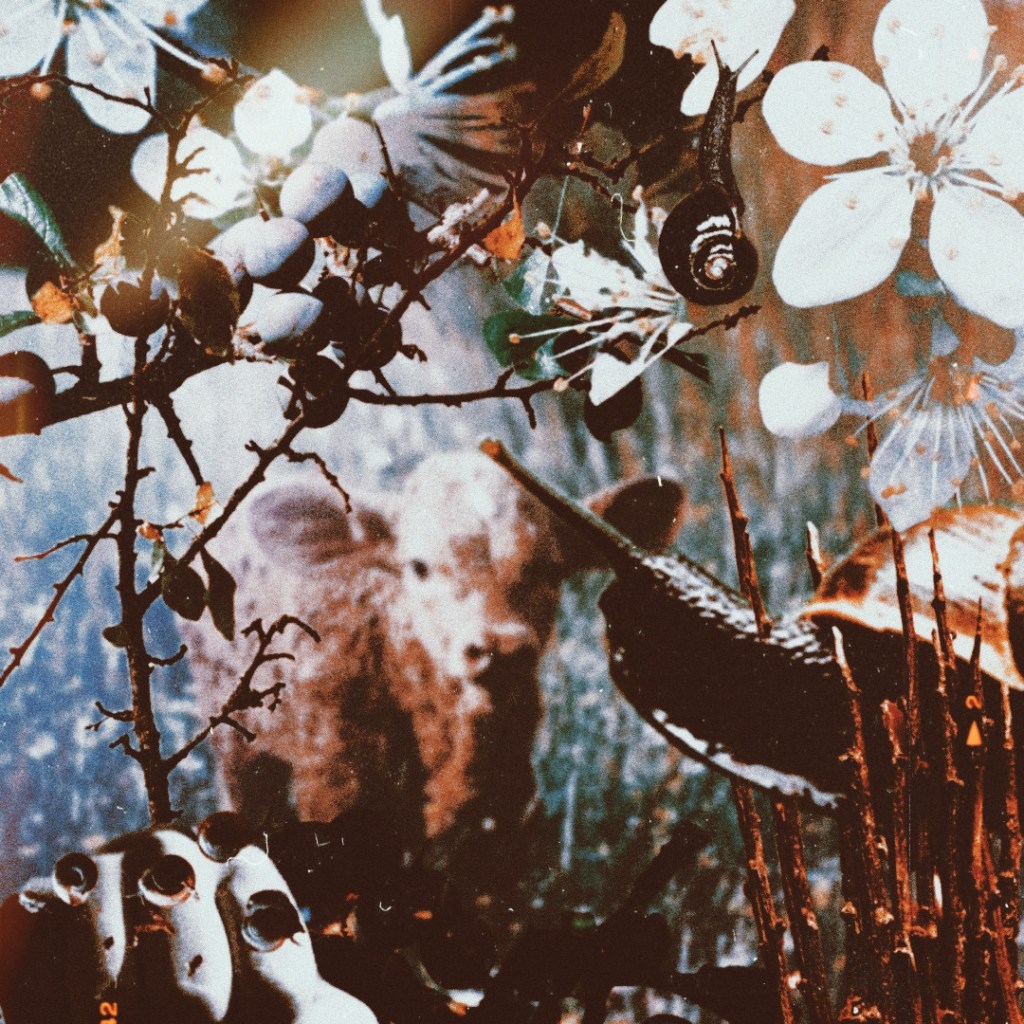
From the family Rosaceae, Blackthorn has black-purple bark with irregular thorny branches. In the early spring, five-petaled, white flowers with many stamens appear before the single-lobed, serrated leaves develop. The fruits, known as sloes, are highly astringent, blue-black and cherry-like. They emerge in late summer or autumn and persist into the early winter. Their unpalatable flavour becomes tempered after several frosts.[5] Stones from the sloe fruits have been found in archaeological sites dating back to Viking-age Dublin and the properties of the Blackthorn have contributed to domestic plant-human relationships.[6] According to Irish archaeologist A. T. Lucas, “a cut branch of blackthorn was used in some parts of Ireland as a simple harrow and dragged along the ground to remove the weeds in a field, or to help sow seeds.”[7] The strong, hard wood can also be straightened and cured by interring the stick in a dung heap or storing it in an active chimney with a coat of butter. This process along with a naturally-occurring knob on sticks cut from the root, makes Blackthorn ideal for motility-aids in the form of sturdy walking sticks.[8] These tools, sometimes loaded with lead, can function as shillelaghs or bataí, fighting sticks which historically served in faction fights or as tools of resistance for a colonised people forbidden weapons by their oppressors.[9] This practice persists with the Irish martial art of bataireacht, which will be discussed at length in Chapter 8. Historically, Blackthorn leaves were substituted for both black tea and tobacco when supplies were short.[10] The most common domestic relationship with Blackthorn involves the laying of hedges, “[e]ffective barrier[s] against wildlife, farm animals, and enemies.”[11] The function of these impenetrable hedges sits in contradiction as they straddle the line between thresholds of protection or oppression, depending on position. During an Gorta Mór, starving citizens were barricaded from the English-owned farms they once inhabited, yet they foraged meagre sustenance, including bitter sloes, from the very borders that forbade them.[12][13] This dichotomous relationship is reflected in the folk beliefs surrounding Blackthorn, which will be discussed in relation to Blackthorn as medicine.
Historical texts document domestic and medicinal relationships with Blackthorn across Europe. Woodville’s “Medical Botany” from 1790-1794 observes practices dating back to the first century C.E. with Dioscorides. The text lists preparations from the fruit, flowers, bark and leaves, which tout astringent and purgative herbal actions for the treatment of diarrhoea, haemorrhaging and inflammation of the tonsils and uvulae. Woodville also records the manufacture of sloe wine and rose-coloured, sloe-based dye. These traditions are echoed by Hool in “Common Plants and Their Uses in Medicine.”[14] In “The Family Herbal,” Hill relates the juice of unripe sloes to the treatment of “fluxes of the belly.” He also documents methods of juice preservation, including boiling and drying. Extracts of dried juice were sold by pharmacists under the misconstrued name of “German acacia.”[15] Most thoroughly, Madaus outlines regional Blackthorn medicine throughout time in “Lehrbuch der Biologischen Heilmittel.”[16] In ancient Greece, thickened sloe juice eased dysentery and Blackthorn flowers and roots were remedies for undisclosed conditions. In the 16th and 17th centuries, under the obsolete name of Prunus silvestris, healers praised Blackthorn preparations in the care of menopausal fever (hot flashes), side stitches, heart and stomach pressures, stones, tooth and throat ulcers, uterine and rectal prolapse, eye inflammation or ulceration and excess hair growth. The onset of the 19th century recognised previously unmentioned herbal actions, including anthelmintic[17] and antinephritic[18] properties. Documented treatment of asthma also hints at potential antispasmodic action. In the 20th century, preparations of blood purifying[19] tea and homeopathic remedies are mentioned along with broad applications across respiratory, digestive, nephritic, cardiovascular and endocrine systems. Beyond these Eurocentric texts, it should be noted that historical medicinal relationships with Blackthorn are also known in West Asia and North Africa.[20]
Archival and anecdotal relationships with Blackthorn are found within Irish folk medicine and material practices are stated for a variety of conditions. A decoction[21] of the sloes is mentioned in Cork for the healing of cramp or colic.[22] A tea of Blackthorn flowers was imbibed over three mornings for constipation in Donegal.[23] Worms in children were cured with a decoction of bark in Tipperary and ointments[24] made from inner bark and butter were applied to warts or sore head[25] in Donegal and Meath respectively.[26] Anthropologist, Anthony D. Buckley, records an “infusion[27] of sloe thorns” for the treatment of diarrhoea in Ulster and sloe gin was identified as beneficial for kidneys by Beatrice Maloney.[28] Veterinary folk medicine practices for domestic animals are also documented. Blackthorn was particularly identified in cures for cattle. Decoctions of bark or leafy branches were dosed alone or with milk and flour for the treatment of scour[29], timber tongue[30] and other undisclosed illnesses and injuries.[31] The cure for timber tongue also described herbal hydrotherapy with steam from the decoction.[32] These empirical folk medicine practices reinforce the herbal actions promoted in historical texts.
There are two archival references to an ointment or salve for sore eyes prepared with “a sort of moss” growing on or below a Blackthorn.[33] These accounts may refer to lichens, which tend to grow on Blackthorn branches, but it is unclear whether their medicinal value is believed to be inherent or due to their proximity to the Blackthorn, which would indicate a more symbolic association. Archival magico-religious cures in relationship with Blackthorn are prevalent and tend to involve sympathetic magic and/or transference. Sympathetic magic is a practice based on association or the idea that like produces like. This is achieved in one of two ways; either the law of similarity or the law of contagion. With the law of similarity, a change imposed on a symbolic object will enact change on that which it represents. The law of contagion occurs when “things which have once been in contact…continue to act on each other at a distance after the physical contact has been severed.”[34] Transference, as mentioned previously, is a healing practice, which moves illness from a person to another being or object through direct or indirection association.[35] The law of similarity is demonstrated by a Kilkenny cure for a prod from a thorn. The inflicted person or their caregiver is advised to obtain a thorn from a Blackthorn tree and use it to make the sign of the cross over the wound.[36] This ritual action is practiced with medicine that mirrors the original cause of the injury. Through a Roscommon ritual involving Blackthorn, a person may be imbued with a cure for burns by licking a Mankeeper. The newt is then hung on a Blackthorn to die.[37] This correlation may be due to the orange stripe on the belly of a Mankeeper or the legendary association of salamanders with fire. Ideas of similarity and contagion are both at work in this procedure. Transference is displayed in magico-religious cures for styes and warts through the sacrifice of other small animals to the Blackthorn. A stye cure in Dublin involves pricking the stye with a thorn and then using the thorn to pierce a Snail. As the Snail withers, the stye fades away.[38]
Within the School’s Collection of the National Folklore Collection, there are at least 34 geographically dispersed archival references for Blackthorn and Snail cures for warts with varying components.[39] The basic formula involves obtaining a Snail and impaling them on the Blackthorn to rot, thus withering the warts.
| Snail and Blackthorn Cures for Warts in the School’s Collection of the NFC | |||||
| NFC S | 94: 278 | Mayo | NFC S | 740: 436 | Westmeath |
| NFC S | 155: 020 | Sligo | NFC S | 747: 029-030 | Westmeath |
| NFC S | 159: 275 | Sligo | NFC S | 745: 214 | Westmeath |
| NFC S | 161: 172 | Sligo | NFC S | 752: 009 | Longford |
| NFC S | 168: 069 | Sligo | NFC S | 766: 227 | Longford |
| NFC S | 168: 191 | Sligo | NFC S | 771: 074 | Kildare |
| NFC S | 260: 122 | Roscommon | NFC S | 811: 062 | Offaly |
| NFC S | 266: 357 | Roscommon | NFC S | 820: 099 | Offaly |
| NFC S | 289: 168 | Cork | NFC S | 838: 098 | Laois |
| NFC S | 289: 174 | Cork | NFC S | 856: 017-018 | Kilkenny |
| NFC S | 520: 273-274 | Limerick | NFC S | 856: 161 | Kilkenny |
| NFC S | 607: 50 | Clare | NFC S | 919: 011 | Wicklow |
| NFC S | 607: 054 | Clare | NFC S | 923: 100 | Wicklow |
| NFC S | 616B: 15_034 | Clare | NFC S | 938: 237 | Monaghan |
| NFC S | 650: 157A | Waterford | NFC S | 950: 350 | Monaghan |
| NFC S | 719: 589 | Westmeath | NFC S | 970: 025 | Cavan |
| NFC S | 727: 025 | Westmeath | NFC S | 983: 002 | Cavan |
Fig. 1
Many accounts specify a black Snail, while there is only one mention of a white Snail.[40] In a Christian context, black is generally associated with evil, while white animals are often allied with the Otherworld in an Irish folk belief context. This colour symbolism may play a role in these cures; however, the designation may only indicate the likelihood of meeting a particular colour Snail in the local landscape. Many treatments indicate the necessity of finding a Snail by chance, a common theme in Irish folk medicine.[41] Others emphasise the importance of the Snail’s house or shell.[42] The Doctrine of Signatures is a fairly universal practice of sympathetic magic that was recorded and popularised by Jakob Böhme in the 16th century. It posits that the characteristics, such as colour and shape, of a plant or other healing ally may indicate an affinity for certain body parts or conditions.[43] According to this principle, the bump of the Snail’s shell on their body emulates a wart on a finger. Direct contagion is instructed in several accounts where the warts are coated with the slime or blood of a Snail before spearing them on the Blackthorn.[44] Four cures substitute Worms, Frogs or Slugs for Snails,[45] while some variations require additional ritual actions, like making the sign of the cross with the Snail[46] or temporal requirements, as evidenced in the two narratives presented in the previous chapter. All of these magico-religious rites involve “the performance of certain acts in a particular way to secure a definite result.”[47] These beliefs and practices are accessible and provide a sense of control. They indicate a vernacular solution to the problem of dis-ease in cooperation with the landscape.
Before the introduction of institutional medicine, causes for dis-ease were attributed to interference by supernatural beings or human enemies, via magic or the evil eye.[48] These beliefs persist to some extent and can exist simultaneously with understandings of allopathic medicine. Folk medicine beliefs and practices must be appreciated within the context in which they are performed. These traditions are rooted in intergenerational knowledge, empirical practice and folk beliefs about Blackthorn. Vernacular relationships with Blackthorn are ambivalent due to the plant’s conflicting attributes of danger and protection.
Blackthorn is generally considered an unlucky plant or bad omen, whose branches should never be brought into the house.[49] In mythology, they have associations with darkness, the devil, the cycle of life and death and the Cailleach, another paradoxical figure, who brings on the start of winter by “strik[ing] the ground with her blackthorn staff.”[50] Blackthorn is often identified as providing the crown of thorns worn by Christ at the crucifixion,[51] a connection that parallels the sacrificial nature of many cures.[52] Fairy faith warns of interference by the leannán sídhe, who guard the Blackthorn and forbid “cut[ting] these bushes or injur[ing] them in any way, because anyone that ever interfered with one of these forts either lost his eye or the use of his arm and these calamities [are] well known.”[53] These concerns were reinforced by the Bretha Comaithchesa,[54] which fined trespassers one heifer for cutting a Blackthorn.[55] Disturbing a Blackthorn tree is particularly dangerous during liminal celebrations, when inimical beings are most present, yet relationships with them are emphasised at that time. Sloe gin is popular at Samhain[56] and a sloe was placed in early versions of barmbrack[57] in Roscommon to indicate the person, who would live the longest – “the fairies are supposed to blight the sloes…on November night, so this will be the last eatable sloe of the year.”[58] Blackthorn often serves as a May bush on Bealtaine and may be seen woven into the top of a Hawthorn maypole.[59] A sibling plant to Hawthorn, the two plants in combination are considered particularly magical and may intensify the transitional ritual space.
In a protective context, Blackthorns guarding holy wells provide cures to visiting pilgrims. These initiates leave offerings on the thorny branches.[60] In the spring, Blackthorns protect baby chicks from predators and later provide adult birds with food when other sources are scarce.[61] One folk belief for the cause of warts is stealing eggs from the nest of a bird.[62] A sacrifice to the protective Blackthorn seems apropos in this context. Blackthorn sticks are particularly known to provide protection against harm, making them an obvious choice for motility aids and weaponry for both resistance and general protection.[63] Some areas of literature and folk belief exhibit more ambivalent attitudes toward Blackthorn. References in Gaelic poetry compare the colours of Blackthorn to the beauty of a woman with fair skin and dark hair, an image that can invoke both desire and danger.[64] As discussed above, Blackthorn hedges, which have historically defined the Irish landscape, can be equally protective or oppressive. This ambiguous dichotomy characterises vernacular interactions with Blackthorn.
Contemporary relationships are limited within institutional medicine, although the anti-oxidant properties of Blackthorn flowers and sloes are being explored for treatment of oxidative stress, cardiovascular dis-ease and cancer.[65] Anti-bacterial actions of the sloes are also of interest, due to the rise of antibiotic resistance[66] and the paradoxical nature of Blackthorn is further demonstrated by the contrast of this herbal action with the likelihood of infection after injury by the thorns.[67] Folk medicine practices with Blackthorn persist, including preparations that combine material heart-protective properties and sympathetic thorn medicine to provide cardiovascular support and a semi-permeable, spiritual-emotional barrier to internal and external trauma.[68] Blackthorn medicine also continues to be enjoyed through the production of sloe gin and jams and folk beliefs, regarding Blackthorn endure through interaction with the landscape, local narratives and vernacular communication.[69] Many of these relationships are characterised by collaboration with, fear of or healthy appreciation for Otherworld entities.
[1] From the National Folklore Collection
[2] Other common terms, such as rational, scientific or conventional medicine either convey unnecessary value judgements or misconceptions.
[3] Hufford 1997, 546
[4] Yoder 1972
[5] Woodville 1790-1794
[6] Wyse Jackson 2014
[7] Wyse Jackson 2014
[8] Locke 2017
[9] Moraghan 2020; Vaughn 2015
[10] Vickery 2019
[11] Vaughn 2015
[12] Vaughn 2015
[13] See chapter 7
[14] 1922
[15] 1812
[16] 1938
[17] Anti-parasitic
[18] Acting against diseases of the kidneys (most likely diuretic action in the opinion of the author, a professional herbalist)
[19] alterative
[20] Kültür 2007
[21] Preparation involving a long boil; usually refers to harder materials, like roots
[22] NFC S 390: 279-281
[23] NFC S 1037: 113h
[24] This ointment is prepared in combination with Elder and Primrose
[25] A severe form of eczema with weeping scabs
[26] NFC 571: 008; NFC S 1124: 295; NFC S 714: 217
[27] A strong tea
[28] 1980; 1972
[29] Diarrhoea
[30] Swelling of the mouth and tongue
[31] NFC S 142: 250; NFC S 168: 246; NFC S 395: 323; NFC S 918: 177
[32] NFC S 395: 323
[33] One account includes tobacco in the preparation; NFC S 228: 19; NFC S 800: 53
[34] Frazer 1922, 11
[35] Hand 1965
[36] NFC S 847: 094-095
[37] NFC S 233: 188
[38] NFC S 795: 126
[39] See fig. 1
[40] NFC S 719: 589
[41] NFC S 168: 69
[42] NFC S 94: 278; NFC S 289: 168 & 175
[43] De Cleene & Lejeune 2003
[44] NFC S 520: 273-274; NFC S 650: 157A; NFC S 740: 436
[45] NFC S 24: 452; NFC S 450: 161; NFC S 727: 25; NFC S 727: 25
[46] NFC 856: 161
[47] Ó Súilleabháin 1978, x
[48] Ó Súilleabháin 1978
[49] DeCleene & Lejeune 2003; MacCoitir 2015
[50] Locke 2017, 17
[51] Several plants have been implicated in this role.
[52] Vickery 1985
[53] NFC S 546: 82
[54] Brehon laws of the neighbourhood
[55] Kelly 2019; Zucchelli 2016
[56] MacCoitir 2015
[57] Barmbrack is a cake enjoyed at Samhain that is baked with a number of divinatory charms to indicate the future prospects of those who partake.
[58] Byrne 1907
[59] Locke 2017
[60] NFC S 442: 221; NFC S 865: 105
[61] Locke 2017
[62] NFC S 45: 197
[63] MacCoitir 2015
[64] Tóibín 1967
[65] Marchelak et al. 2017; Negrean et al. 2023
[66] Kotsou et al. 2023; Negrean et al. 2023
[67] Nozedar 2012
[68] Professional and empirical experience of the author
[69] Wyse Jackson 2014


Leave a comment